


Table of Contents
Getting visitors to your website is only half the battle. The bigger challenge is convincing them that your business is trustworthy.
People don’t buy simply because your website looks beautiful. They buy because they feel confident that you’re genuine, reliable, and capable of delivering what you promise.
A trustworthy website is built through the right content. Every page should answer the questions visitors are already asking in their minds:
- Who are you?
- Can I trust you?
- Is your product really good?
- Will you support me after I buy?
- Have other people used your service?
- Is my payment secure?
Here are the pages that matter most.
About us page
The About Us page is often one of the most visited pages on a website.
Visitors want to know who’s behind the business. Share your story, your mission, your experience, and what inspired you to create your products or services.
People trust people more than logos.
Adding real photos of your team or workspace can also make your business feel more authentic.
Contact page
A business that’s easy to contact immediately feels more trustworthy.
Your Contact page should include clear information such as:
- Email address
- Contact form
- Business location (if applicable)
- Business hours
- Social media accounts
Visitors are far more confident buying when they know they can reach someone if they need help.
Customer reviews and testimonials
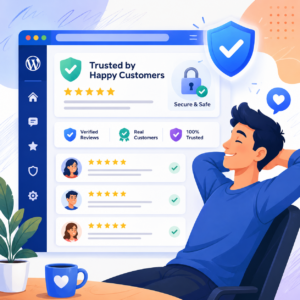
Nothing builds trust faster than happy customers.
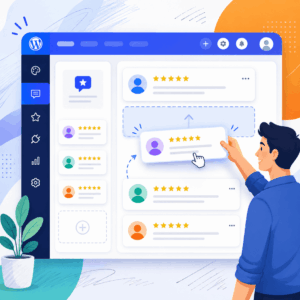
Real reviews show that people have already purchased your product or service and had a positive experience.
Whenever possible, include:
- Customer names
- Profile photos
- Company names
- Ratings
- Detailed feedback
Authentic testimonials are far more convincing than generic marketing claims.
Portfolio or case studies
If you provide services, don’t just tell visitors what you can do.
Show them.
A portfolio or case study demonstrates real results and gives potential customers confidence in your skills.
Include before-and-after examples, project outcomes, or measurable improvements whenever possible.
Frequently asked questions (FAQ)
Many visitors leave a website simply because they can’t find answers quickly.
A well-written FAQ helps remove common concerns before they become reasons not to buy.
Cover topics like:
- Pricing
- Refund policy
- Delivery
- Licensing
- Technical support
- Compatibility
- Setup process
Reducing uncertainty increases confidence.
Privacy policy
Visitors share personal information with your website.
A Privacy Policy explains how their information is collected, stored, and protected.
This page is especially important if your website uses:
- Contact forms
- Analytics
- Cookies
- Email subscriptions
- Online payments
It also helps demonstrate that your business takes user privacy seriously.
Terms and conditions
Clear terms create transparency.
Visitors appreciate knowing exactly what they’re agreeing to before making a purchase.
Include information about:
- Purchases
- Usage rights
- Refunds
- Responsibilities
- Limitations
- Account rules
Transparency builds long-term trust.
Refund and return policy
One of the biggest reasons people hesitate to buy is fear.
“What if it doesn’t work?”
A clear refund policy removes much of that fear.
Even if your policy has specific conditions, being upfront about it makes your business appear more honest and professional.
Blog or knowledge center
Regularly publishing helpful articles shows that your business understands its industry.
Educational content positions your brand as an expert while helping visitors solve real problems.
Useful articles often build more trust than promotional content.
Security and trust badges
If your website processes payments or customer information, displaying security indicators can increase confidence.
Examples include:
- SSL certificate (HTTPS)
- Secure payment providers
- Money-back guarantee
- Verified reviews
- Industry certifications
- Compliance badges
These visual trust signals reassure visitors that their information is protected.
Product documentation or help center
If you sell software, plugins, digital products, or online services, comprehensive documentation demonstrates professionalism.
Visitors feel more confident when they know support resources already exist before they make a purchase.
Documentation also reduces support requests and improves the overall customer experience.
The bottom line
Trust isn’t built by a single page—it’s built through the entire website experience.
When visitors can easily learn who you are, see real customer feedback, understand your policies, find answers to their questions, and contact you without difficulty, they’re much more likely to become customers.
A professional design may create a great first impression, but it’s clear, transparent, and helpful content that turns that impression into lasting trust.
No comments yet. Be the first to share your thoughts!
Join the conversation